Date:2021-09-09
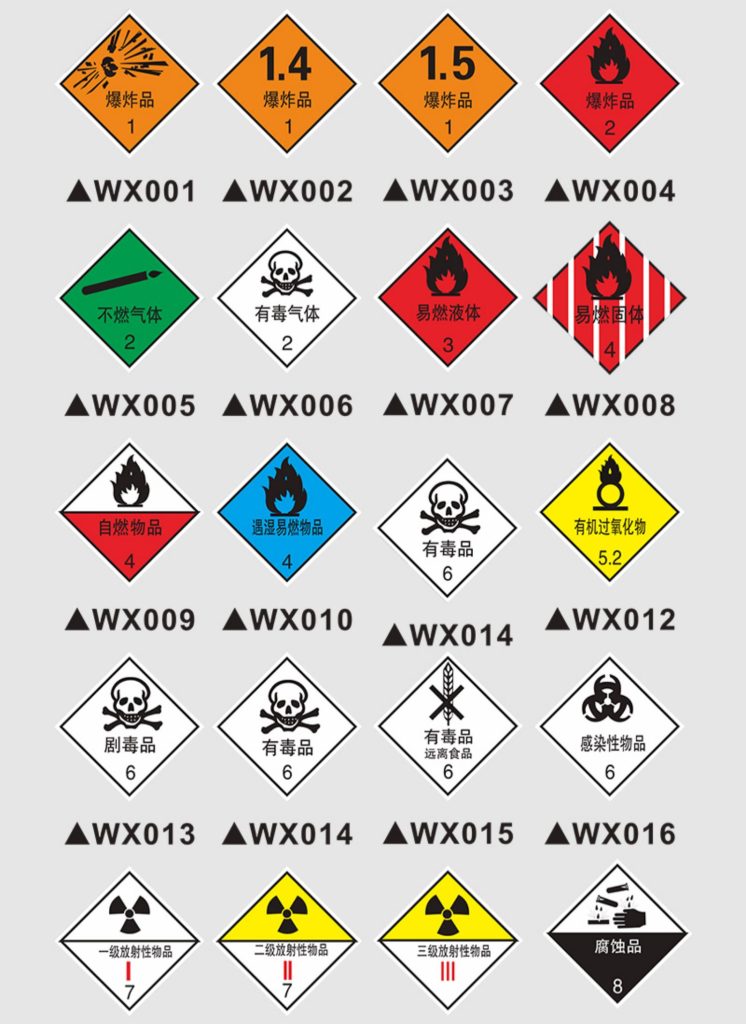
Previously, we have introduced common examples of dangerous goods in daily life. According to their different hazardous characteristics, dangerous goods can be divided into nine categories, and some categories are further subdivided into several items. The following is an explanation of Class 1 and Class 2 dangerous goods:
Class 1: Explosives. Such items will undergo violent chemical reactions under external influences, instantly generating a large amount of gas and heat, leading to a sharp rise in surrounding pressure and causing an explosion, which damages the surrounding environment. Common explosives include explosives, fireworks and firecrackers, etc.
Class 2: Compressed Gases. This category is subdivided into 2.1 Flammable Gases, 2.2 Non-flammable Gases, and 2.3 Toxic Gases. Fire extinguishers, carbon monoxide, carbon dioxide, oxygen, helium, etc., all belong to this category of dangerous goods. Common specific products include: lighters (UN1057 2.1), insecticides, aerosols (UN1950 2.1), sulfur hexafluoride (UN1080 2.2), etc. Since Class 2 dangerous goods are compressed gases, they are usually packed in steel cylinders. Therefore, a steel cylinder certificate (also known as a boiler inspection certificate) must be provided during transportation, production, and storage. This certificate is a necessary document for handling dangerous goods declaration when booking shipping space.
Class 3: Flammable Liquids. Such items are liquid at normal temperature, flammable when exposed to fire, and have a flash point below 60°C. Their core characteristics include: flammable and explosive vapor, thermal expansion, easy static accumulation, high fluidity, reaction with oxidizing strong acids and oxidants, and some have varying degrees of toxicity.
Common flammable liquids include: coatings (UN1263, including pigments, spray paints, colorants, polishes, etc.), ethanol (UN1170), perfumes (UN1266), etc. When exporting such dangerous goods, special attention should be paid to the flash point parameter. Flash point information can be found in Item 9 of the product’s MSDS (Material Safety Data Sheet). For low-flash-point flammable liquids, ordinary freight forwarders usually do not undertake transportation; it is necessary to entrust professional dangerous goods freight forwarders to book shipping space to improve the approval rate of shipping space.
Dangerous Goods Packaging Certificates are divided into two types: Performance Certificates and Usage Certificates. Performance Certificates are provided by packaging factories to exporters; Usage Certificates are obtained after passing inspection by commodity inspection authorities. Currently, relevant regulatory authorities are increasingly strict in supervising the export of dangerous goods. Some enterprises cannot normally apply for Dangerous Goods Packaging Certificates due to incomplete qualifications or unfamiliarity with policies, which hinders the export process of dangerous goods. The freight forwarding industry can assist enterprises in solving the above problems with professional operational capabilities, ensuring the safe and legal export of dangerous goods.
There are a total of nine categories of dangerous goods, and the third category has been introduced earlier. The following is the details of the fourth category of dangerous goods. Class 4 dangerous goods include three sub-items: Flammable Solids, Spontaneously Combustible Items, and Dangerous When Wet Items. The specific explanations are as follows:
Item 4.1: Flammable Solids. Such chemicals have a low ignition point, are sensitive to heat, impact, and friction, are easily ignited by external fire sources, burn rapidly, and may release toxic smoke or gases (excluding substances already classified as explosives). Their core characteristics include:
(1) Easily oxidized, easily decomposed or sublimated when heated, and easily cause violent and continuous combustion when exposed to open flames;
(2) Violent reactions will occur when in contact with oxidants, acids, etc., causing combustion and explosion;
(3) High sensitivity to friction, impact, and vibration;
(4) Most are toxic, or their combustion products are toxic or corrosive. Common products include red phosphorus (UN1138 4.1), camphor (UN2717 4.1), magnesium powder (UN1418 4.3), etc.
Item 4.2: Spontaneously Combustible Items. Such chemicals have a low auto-ignition point, are prone to oxidation reactions in the air and release heat, which in turn causes spontaneous combustion. Combustibility is their core characteristic. The chemical structure of spontaneously combustible items has no regularity, so each has unique spontaneous combustion characteristics.
For example, yellow phosphorus: it is chemically active, extremely easy to be oxidized, has an extremely low ignition point, and can ignite spontaneously quickly after being exposed to the air; yellow phosphorus does not react chemically with water, so it is usually stored in a water-sealed manner. In addition, yellow phosphorus itself is highly toxic, and its combustion product, phosphorus pentoxide, is also toxic, and will form highly toxic metaphosphoric acid when exposed to water. Therefore, when extinguishing fires caused by yellow phosphorus combustion, it is necessary to take protective measures to avoid poisoning.
Item 4.3: Dangerous When Wet Items. When such chemicals come into contact with water or moisture, they will undergo violent chemical reactions, release a large amount of flammable gas and heat, and some can cause combustion or explosion without an open flame. In addition to reacting with water, when such items come into contact with acids or oxidants, the reaction will be more intense and the danger will be higher.
Therefore, during storage, transportation, and use, strict waterproof and moisture-proof measures must be taken, open flames are strictly prohibited from approaching, and they must be stored separately from other substances with conflicting properties. When a fire breaks out with such items, it is strictly prohibited to use water, acid-base foam, or chemical foam for fire fighting.
Telephone
Copyright @ 2026 SHANGHAI JINGTIAN GONGSI No:84506